

The ultimate guide to choosing the right rug for your home
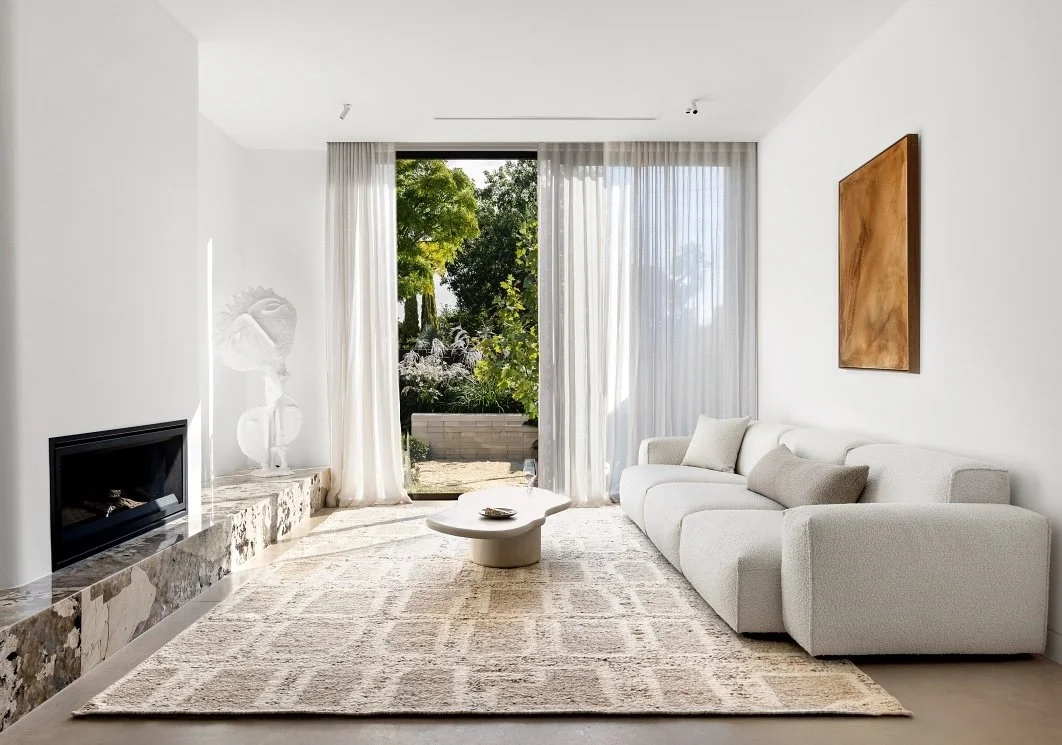
Rugs are one of the most transformative elements in a room. They ground your furniture, add texture and warmth, and help define spaces. Yet, one of the most common mistakes I see in my work as an interior designer is rugs that are simply too small. Choosing the right size and placement can make a world of difference, whether in your living room, bedroom, or hallway.
Living Rooms: Anchor Your Furniture
In living rooms, a rug isn’t just a decorative piece—it’s a foundation. A rug should comfortably accommodate at least the front legs of sofas and chairs, if not all furniture. Too often, I see beautiful rugs that don’t run the width of the sofa, which visually chops up the space and feels disconnected.
For larger living areas, consider a rug that’s around 200cm x 300cm or bigger, depending on your furniture layout. If you have an L-shaped sofa or a chaise, aim to have all seating areas partially on the rug. This creates cohesion and a sense of balance.
Fibres & Weaves: For high-traffic living areas, wool rugs are durable, resilient, and naturally stain-resistant. Flatweave or low-pile options work well for a more casual, contemporary look, while hand-knotted wool can add elegance and softness underfoot.
Bedrooms: Comfort Underfoot
In bedrooms, rugs add comfort and warmth, especially when stepping out of bed in the morning. A common approach is to place a rug under the bed, extending beyond the sides and foot. For a queen-sized bed, aim for at least 200cm x 300cm; for a king, 250cm x 300cm ensures that the rug frames the bed without looking too small.
You can also layer rugs for visual interest, combining textures like a soft wool underlay with a silk or cotton accent rug. In smaller rooms, consider runner-style rugs along each side of the bed to create a cosy, welcoming feel.
Fibres & Weaves: Wool and cotton are excellent for bedrooms. Wool provides warmth and longevity, while cotton is soft and easy to clean. Avoid high-pile rugs in areas where the rug may extend under the bed and get flattened.
Hallways & Entryways: Durable and Stylish
Hallways and entryways are often overlooked, but rugs here can make a strong design statement while protecting floors. Runners are the perfect choice. Measure your hallway and leave around 10-15cm of bare floor on each side for balance.
Fibres & Weaves: Durable fibres like wool, polypropylene, or jute work best. Flatweave designs are practical for high-traffic zones, and patterned rugs can help disguise wear. For Australian homes, consider fibres that are easy to clean and can handle dust and grit brought in from outside.
Rug Placement Tips
Living room: Ensure the rug anchors the seating group. All front legs on the rug is ideal.
Bedroom: Extend the rug at least 50cm beyond the bed sides.
Hallways: Leave a margin on either side and secure the rug to prevent slipping.
When it comes to sourcing your rug, I have a few favourite suppliers you might like to check out - Milk & Sugar, Tallira by The Rug Collection and Miss Amara. These offer a great mix of price points, styles, fibres, and sizes suitable for every room.
Need Help With Rug Selection?
If choosing the right rug feels overwhelming, this is exactly the kind of design decision I can help with in my one-off design consultations. I can guide you through sizing, placement, texture, and style to ensure your rugs are perfectly suited to your home.